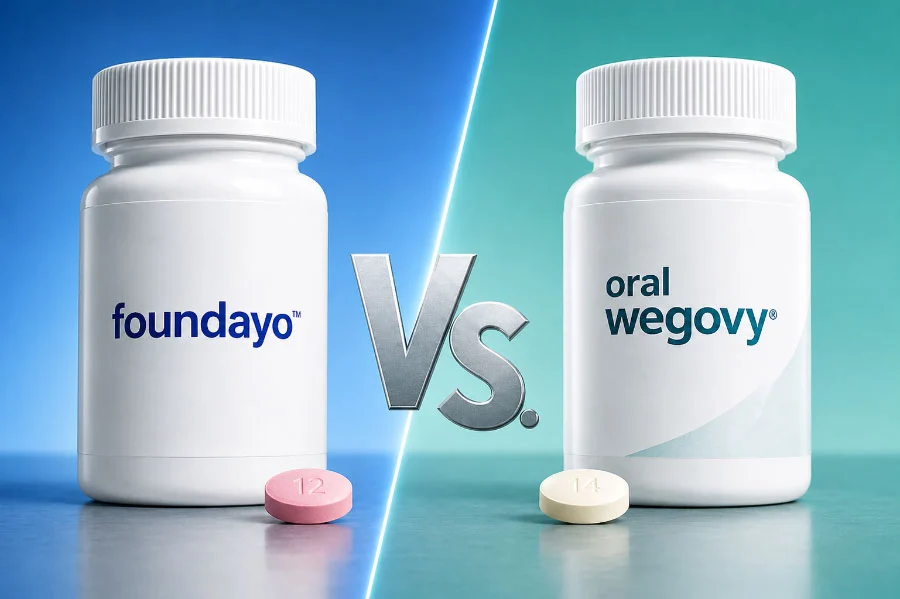
Foundayo vs. Oral Wegovy: The New GLP-1 Battle Pharma Cant Ignore
30-Apr-2026
The weight-loss drug race has entered its next act, and this time, the spotlight is not on injections. It is on pills. In early 2026, Novo Nordisk’s semaglutide tablet moved first in the U.S. market, followed by Eli Lilly’s newly approved oral orforglipron brand in April. Lilly said its once-daily tablet was FDA approved on April 1, 2026, for adults with obesity or overweight with weight-related medical problems, and highlighted that it can be taken without food or water restrictions. Novo Nordisk, meanwhile, already lists Wegovy semaglutide tablets 25 mg among its U.S. obesity products.
For pharma leaders, this is more than a launch story. It is a commercial stress test for the next decade of metabolic medicine. The injectable boom proved demand. The oral era will test convenience, adherence, access, pricing, brand power, and real-world outcomes.
Why is this story such a major pharma topic right now?
The biggest reason is timing. The weight-loss category has already become one of the most watched spaces in healthcare, and now the competition is shifting from injections to tablets. A pill can feel less intimidating for patients who dislike needles, travel frequently, or want a simpler routine.
This matters because GLP-1 therapies are no longer niche metabolic treatments. They are shaping conversations across obesity care, cardiovascular risk, employer benefits, and consumer health demand. Novo reached the oral market first, while Lilly entered soon after with a
convenience-focused challenger. Lilly says its pill can be taken any time of day without food or water restrictions, a detail that may influence patient behavior
Why does this rivalry matter beyond just two products?
This battle matters because it could redefine how pharma companies think about chronic disease markets. It is not only about which brand sells more tablets. It is about whether oral weight-loss medicines can expand the treatment population beyond patients already comfortable with injections.
If pills attract new patients, the entire category grows. If they mostly switch patients from injectable products, the fight becomes more about brand defense, pricing, and retention. Either outcome will influence launch planning, payer strategy, field force messaging, and lifecycle management.
The rivalry may also reshape:
- Patient segmentation
- Telehealth partnerships
- Pharmacy access models
- Long-term adherence programs
- Employer and insurer coverage decisions
In short, this is not a two-brand contest. It is a preview of how the next phase of the Obesity market may operate.
What are the biggest commercial differences between the two medicines?
The largest commercial difference is convenience. Novo’s product benefits from a familiar brand name and existing physician confidence around semaglutide. Lilly’s entry, however, is being positioned around flexible daily use, especially because it does not require food or water timing restrictions, according to the company’s launch statement.
Brand trust also matters. Novo can build on an established weight-loss identity, while Lilly must educate the market around a newer name. That creates two very different commercial stories: one based on familiarity, the other based on simplicity.
For pharma teams, the comparison is not only clinical. It includes
- Ease of prescribing
- Patient onboarding
- Coverage speed
- Refill behavior
- Brand recall
- Pharmacy availability
The product with the smoothest experience may gain the strongest commercial advantage.
What do the early prescription signals suggest so far?
Early numbers suggest Novo has the stronger launch momentum, but it is too early to declare a final winner. Recent market reporting showed Lilly’s pill rising from 1,390 prescriptions in its first brief week to 3,707 in its second week, while Novo’s pill reached much higher volumes in its early launch period. Analysts have warned that weeks eight to twelve may offer a clearer comparison than the first few launch weeks.
That means early Prescription trends should be read carefully. First fills can be influenced by brand awareness, sampling, payer setup, pharmacy stocking, and media coverage. The more important question is whether patients continue therapy after the first month.
A launch can look exciting at the start but still struggle if access, tolerance, or affordability becomes a barrier.
What key clinical and access points should pharma professionals watch?
The clinical story will remain central, but commercial success will depend on more than trial results. Pharma professionals should watch weight-loss outcomes, tolerability, discontinuation rates, glucose effects, and long-term maintenance data. Drug efficacy will help shape physician confidence, but real-world persistence may decide market leadership.
Access is equally important. A strong medicine can underperform if patients face high costs, prior authorization delays, or limited coverage. Lilly has highlighted availability through LillyDirect, telehealth providers, and retail pharmacies, along with commercial coverage and self-pay pricing options.
Key access signals to monitor include:
- Insurance coverage quality
- Pharmacy abandonment rates
- Prior authorization friction
- Monthly refill consistency
- Patient affordability programs
In this race, science opens the door, but access keeps patients inside.
How should pharma companies evaluate who is really winning this oral race?
Pharma companies should avoid judging the race by weekly prescription charts alone. Early demand is useful, but it can be noisy. A stronger scorecard should include starts, refills, adherence, payer coverage, patient satisfaction, physician adoption, and discontinuation trends.
The real winner will be the product that turns curiosity into durable use. In chronic weight management, a one-month start is not the same as a one-year patient. Companies should also track whether tablets are expanding the category or simply moving patients away from injectable products.
This matters for Pharma strategy because category expansion requires education and broad access, while share shifting requires sharper competitive positioning. The smartest companies will look beyond launch headlines and measure patient behavior over time, especially persistence, affordability, and treatment confidence.
How could this competition change obesity, diabetes, and broader portfolios?
This competition could push pharma companies to rethink how metabolic portfolios are built. Instead of treating pills and injections as separate assets, companies may design connected treatment journeys: oral entry, injectable escalation, maintenance therapy, and combination care.
It may also influence the wider Pharma pipeline. Companies developing metabolic, cardiovascular, kidney, liver, or Diabetes medication assets will likely pay closer attention to format, convenience, and patient preference. The rise of Oral drugs could make delivery methods a core part of product strategy, not just a formulation detail.
Future competition may focus on:
- Combination therapies
- Maintenance dosing
- Cardiometabolic outcomes
- Digital support programs
- Employer health partnerships
The companies that win will not only launch strong products. They will build ecosystems around long-term metabolic care.
Conclusion
The oral weight-loss race is becoming one of pharma’s most important commercial battles. Novo has first-mover strength and a powerful brand connection. Lilly has entered with a convenience-centered challenger that could appeal to patients looking for a simpler daily option.
For pharma professionals, the key is to look past launch noise. The real signals will come from access, refills, adherence, tolerability, payer response, and long-term outcomes. This battle is not just about who sells more pills first. It is about who can own the future patient journey in weight management and metabolic health.
Recent Posts
 copy.webp "Banner : Impact of 2024 HCPCS Updates on Healthcare Providers")
Impact of 2024 HCPCS Updates on Healthcare Providers
16-Aug-2024 copy.webp "Banner : The 2024 Guide to Employee Motivation")
The 2024 Guide to Employee Motivation
21-Aug-2024 copy.webp "Banner : 7 Ways to Improve Performance Management at Your Company")
7 Ways to Improve Performance Management at Your Company
23-Aug-2024 copy.webp "Banner : Choosing the Best HR Tool for Education: 5 Things You Need to Know")
Choosing the Best HR Tool for Education: 5 Things You Need to Know
28-Aug-2024
Payroll Records: A Guide to Retention and Disposal
04-Sep-2024 copy.webp "Banner : AI Limitations Why Certain Jobs Will Always Require a Human Touch")
AI Limitations Why Certain Jobs Will Always Require a Human Touch
09-Sep-2024 copy.webp "Banner : How the New HIPAA Rules Impact Reproductive Health Care Providers")
How the New HIPAA Rules Impact Reproductive Health Care Providers
13-Sep-2024 copy.webp "Banner : Best Strategies to Manage Toxic Employees and Boost Team Morale")
Best Strategies to Manage Toxic Employees and Boost Team Morale
20-Sep-2024 copy.webp "Banner : Top 7 Common Coding Errors That Trigger Audits and How to Prevent Them")
Top 7 Common Coding Errors That Trigger Audits and How to Prevent Them
26-Sep-2024 copy.webp "Banner : How OSHA is Involved in Mandating Protections for Employees")
How OSHA is Involved in Mandating Protections for Employees
14-Oct-2024 copy.webp "Banner : FDA Software Classification Guidance")
FDA Software Classification Guidance
22-Oct-2024 copy.webp "Banner : Stay Ahead of FDA Inspections: Best Practices for Managing Form 483 Citations and Warning Letters")
Stay Ahead of FDA Inspections: Best Practices for Managing Form 483 Citations and Warning Letters
24-Oct-2024 copy.webp "Banner : Best Practices to Reduce Validation Effort and Costs")
Best Practices to Reduce Validation Effort and Costs
06-Nov-2024 copy.webp "Banner : Best Practices for Medical Device Software Validation and Risk Management")
Best Practices for Medical Device Software Validation and Risk Management
14-Nov-2024
Training Strategies to Comply with EEOC New Harassment Standards
14-Nov-2024 copy.webp "Banner : Guideline On Computerized Systems and Electronic Data in Clinical Trials")
Guideline On Computerized Systems and Electronic Data in Clinical Trials
17-Dec-2024 copy.webp "Banner : What is Human Factor Engineering in Medical Terms?")
What is Human Factor Engineering in Medical Terms?
17-Dec-2024 copy.webp "Banner : What is the Objective of Supervisor Training")
What is the Objective of Supervisor Training
24-Dec-2024